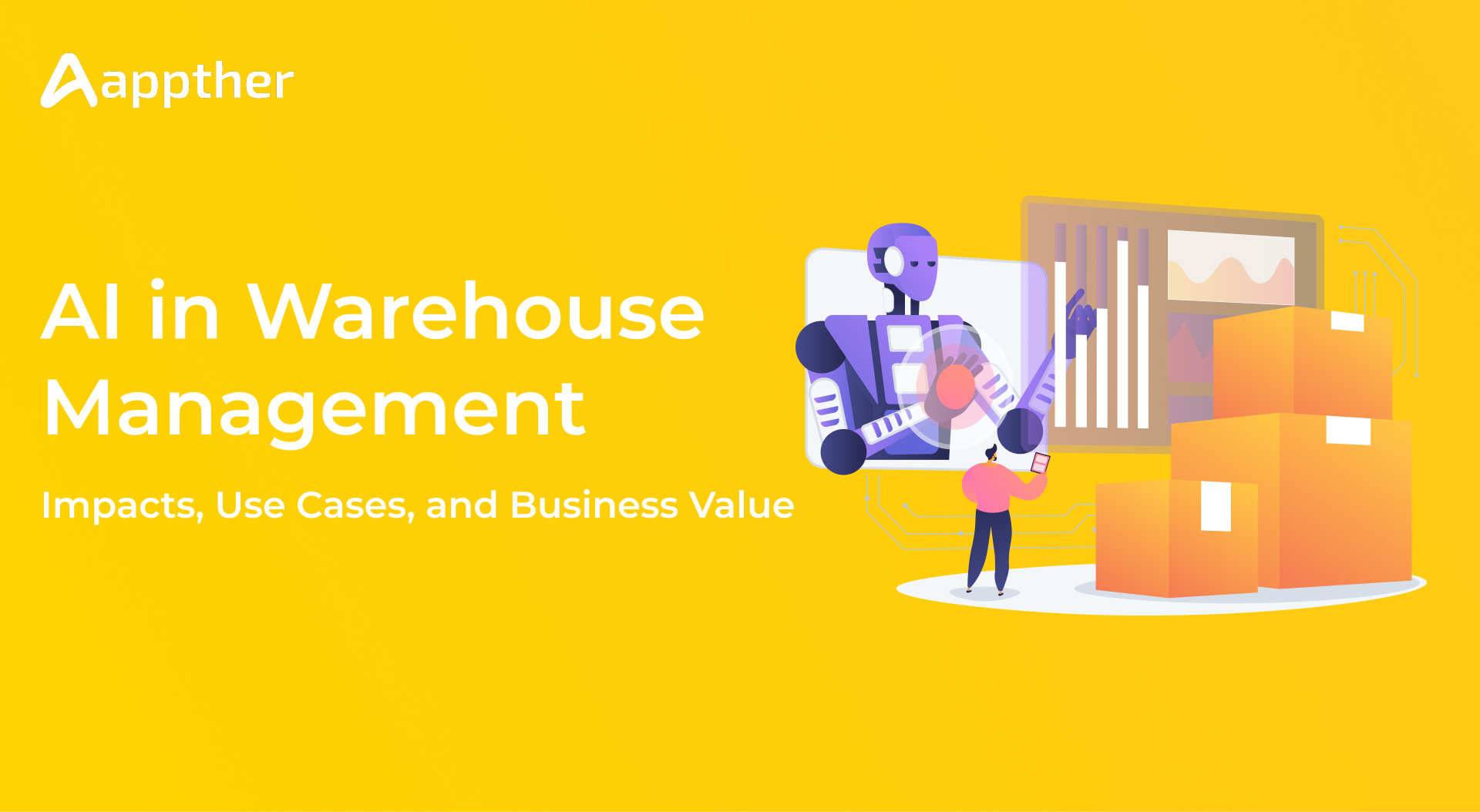
Warehouse management is undergoing a massive transformation. With rising customer expectations, same-day deliveries, and complex supply chains, traditional warehouse management systems (WMS) are no longer sufficient. This is where Artificial Intelligence (AI) in Warehouse Management plays a critical role.
AI-powered warehouses use machine learning, computer vision, predictive analytics, and intelligent automation to improve efficiency, accuracy, safety, and scalability. From demand forecasting to robotic picking and predictive maintenance, AI is redefining how modern warehouses operate.
What Is AI in Warehouse Management?
AI in warehouse management refers to the integration of intelligent algorithms and data-driven models into warehouse operations to automate processes, analyze large data sets, and make real-time decisions. These AI capabilities are embedded into modern WMS platforms and connected systems such as IoT sensors, robotics, and ERP solutions.
Unlike rule-based automation, AI continuously learns from historical and real-time data, enabling warehouses to adapt to changing demand patterns, workforce constraints, and operational disruptions.
Why AI Is Critical for Modern Warehouses
Modern warehouses face several challenges:
- Increasing order volumes and SKUs
- Labor shortages and rising costs
- Demand volatility
- Pressure for faster and error-free fulfillment
AI addresses these challenges by delivering:
- Intelligent decision-making
- Real-time visibility
- Predictive insights
- Autonomous and semi-autonomous operations
Key Impacts of AI in Warehouse Management
1. Improved Inventory Accuracy
AI-driven inventory management systems use computer vision, sensors, and predictive models to maintain real-time inventory visibility. This significantly reduces discrepancies caused by manual counts and data entry errors.
2. Faster Order Fulfillment
AI optimizes picking paths, slotting strategies, and order prioritization. By learning from order patterns, AI ensures that high-demand items are stored closer to packing stations, reducing travel time and speeding up fulfillment.
3. Intelligent Demand Forecasting
Machine learning models analyze historical sales, seasonal trends, promotions, and external factors to forecast demand accurately. This helps warehouses avoid stockouts and overstocking while improving service levels.
4. Labor Optimization
AI enables smart workforce planning by predicting labor requirements based on order volumes and workload patterns. It can also recommend task assignments based on worker skills, availability, and safety considerations.
5. Predictive Maintenance
AI continuously monitors warehouse equipment such as conveyors, forklifts, and robotics. By detecting anomalies, it predicts failures before they occur, reducing downtime and maintenance costs.
6. Enhanced Safety and Compliance
AI-powered systems analyze operational data to identify safety risks, recommend ergonomic improvements, and assign hazardous tasks to robots instead of humans.
7. Cost Reduction
By optimizing inventory, reducing errors, improving labor efficiency, and minimizing downtime, AI helps organizations significantly reduce operational costs.
Top Use Cases of AI in Warehouse Management
AI-Powered Warehouse Automation
Autonomous Mobile Robots (AMRs) and robotic picking systems use AI to navigate warehouses, avoid obstacles, and adapt to layout changes without manual reprogramming.
Smart Slotting and Layout Optimization
AI analyzes product velocity and order combinations to recommend optimal storage locations, improving picking efficiency and space utilization.
Computer Vision for Quality Control
AI-driven cameras automatically verify items during picking, packing, and shipping to ensure order accuracy and reduce returns.
Intelligent Order Orchestration
AI prioritizes orders based on delivery commitments, inventory availability, and resource constraints, ensuring on-time fulfillment.
AI Assistants for Warehouse Managers
AI-powered dashboards and virtual assistants provide insights, alerts, and recommendations, helping managers proactively resolve issues.
AI in Warehouse Management vs Traditional WMS
| Traditional WMS | AI-Powered WMS |
|---|---|
| Rule-based logic | Self-learning and adaptive |
| Manual decision-making | Predictive and automated decisions |
| Limited forecasting | Advanced demand prediction |
| Reactive issue handling | Proactive issue prevention |
Challenges in Implementing AI in Warehousing
- Data quality and integration across systems
- Change management and workforce adoption
- Initial investment and ROI measurement
- Cybersecurity and data privacy concerns
A phased AI implementation strategy with the right technology partner helps mitigate these challenges.
How Appther Can Help You Implement AI in Warehouse Management
At Appther, we specialize in building scalable, AI-driven warehouse and supply chain solutions tailored to your business needs.
Our Capabilities Include:
- AI-Powered Warehouse Management Solutions
Custom AI modules integrated with your existing WMS or ERP systems. - Demand Forecasting & Inventory Optimization
Machine learning models to predict demand and optimize stock levels. - Computer Vision & Automation
AI-based quality checks, barcode scanning, and robotic integration. - Custom Dashboards & Analytics
Real-time insights for warehouse managers and leadership teams. - Cloud & Scalable Architecture
Secure, cloud-native solutions designed for performance and growth.
With deep expertise in AI, IoT, mobile applications, and enterprise platforms, Appther helps organizations transform traditional warehouses into smart, data-driven fulfillment centers.
Future Trends of AI in Warehouse Management
- Autonomous warehouses with minimal human intervention
- AI-driven digital twins for warehouse simulation
- Integration of AI with blockchain for traceability
- Voice and conversational AI for hands-free warehouse operations
AI will continue to evolve from operational support to strategic decision-making in warehouse ecosystems.
Frequently Asked Questions (FAQs)
1. What is AI in warehouse management?
AI in warehouse management uses machine learning, automation, and analytics to optimize inventory, fulfillment, labor, and equipment operations.
2. How does AI improve warehouse efficiency?
AI reduces manual work, optimizes workflows, predicts demand, and prevents errors, leading to faster and more accurate operations.
3. Is AI suitable for small and mid-sized warehouses?
Yes. Cloud-based AI solutions make it cost-effective and scalable for warehouses of all sizes.
4. What industries benefit most from AI-powered warehouses?
Ecommerce, retail, manufacturing, logistics, pharmaceuticals, and FMCG benefit significantly from AI in warehousing.
5. How long does it take to implement AI in a warehouse?
Implementation timelines vary but typically range from a few weeks for pilots to several months for full-scale deployments.
Conclusion
AI in warehouse management is no longer optional—it is a competitive necessity. Businesses that adopt AI-driven warehouse solutions gain higher efficiency, better customer satisfaction, and long-term scalability.
By partnering with Appther, you can confidently embark on your AI transformation journey and build a future-ready warehouse ecosystem.
Ready to modernize your warehouse with AI? Contact Appther today.