The IoT Revolution: 9 Powerful Ways It’s Transforming Mobile App Development
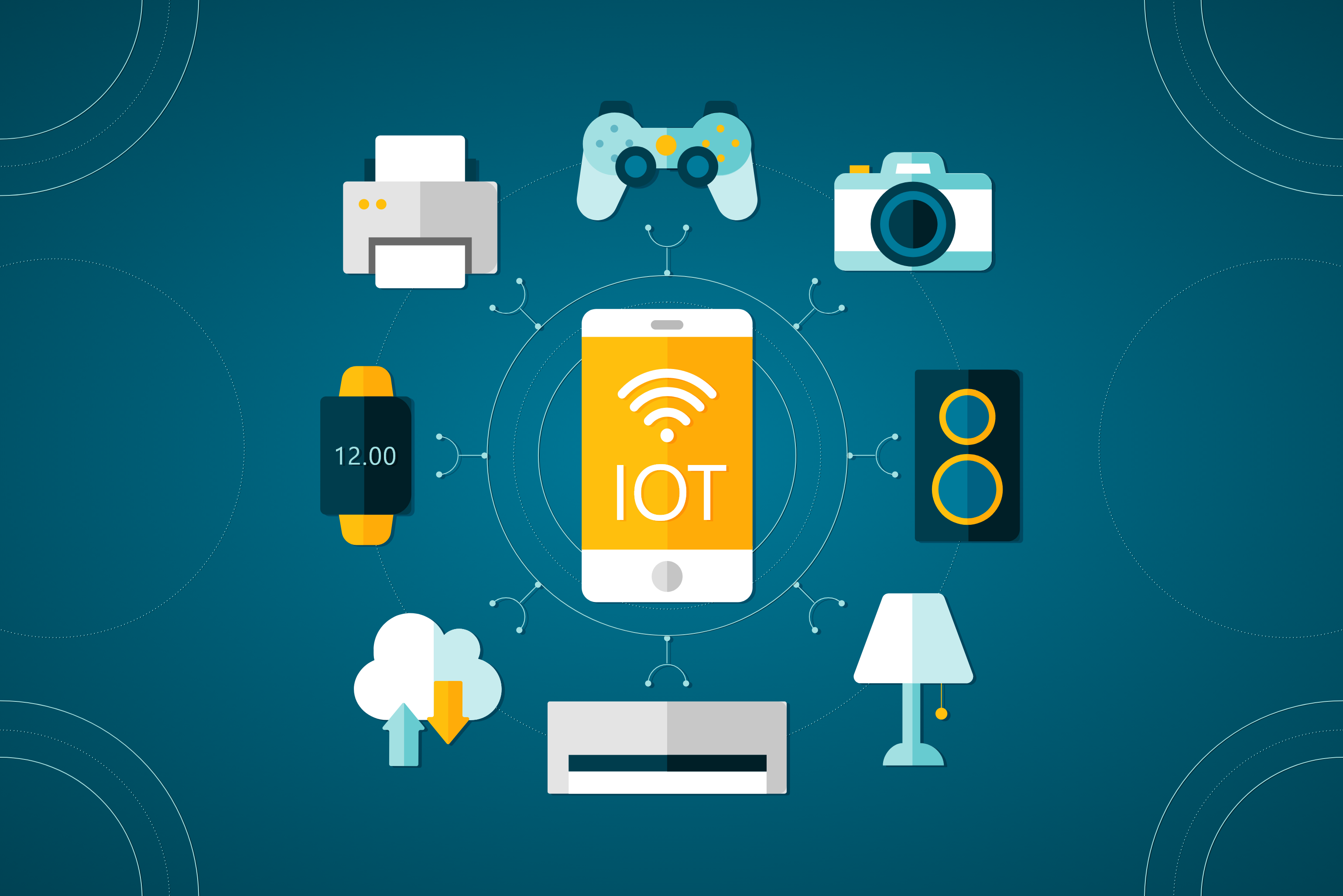
The Internet of Things (IoT) is no longer a futuristic concept; it’s a powerful engine driving innovation across every industry. By connecting physical devices to the internet and each other, IoT creates a network of smart, data-sharing ecosystems. This transformation is fundamentally reshaping mobile app development, turning smartphones into the universal remote control for our digital lives.
The numbers speak for themselves: The global IoT market is soaring, projected to reach over USD 1.3 trillion by 2028, with billions of connected devices worldwide. For businesses and developers, this isn’t just a trend it’s a paradigm shift, creating unprecedented opportunities to build smarter, more interactive, and indispensable mobile applications.
Let’s explore the key benefits of integrating IoT with mobile app development.
1. Unleashing Unprecedented Interactivity & Control
IoT transforms mobile apps from static tools into dynamic command centers. Users are no longer passive consumers; they are active operators.
-
Trending Use Case: Smart home apps that allow users to control security cameras, thermostats, and lights from anywhere. Fitness apps that sync with wearables to provide real-time health metrics and personalized coaching.
2. Driving Cost-Effectiveness & Operational Efficiency
IoT automation significantly reduces human intervention and operational costs. By 2025, IoT is expected to generate $1.2 to $3.7 trillion in annual economic impact through optimized processes.
-
Trending Use Case: Enterprise asset management apps that use IoT sensors for predictive maintenance, alerting managers to equipment failures before they happen, thus minimizing downtime and repair costs.
3. Fueling Hyper-Personalized User Experiences
IoT devices generate a constant stream of real-time user data. Mobile apps leverage this with AI to deliver deeply personalized experiences.
-
Trending Use Case: A retail app that suggests recipes based on the items in your smart fridge or a health app that adjusts your fitness plan based on data from your smart scale and wearable.
4. Enhancing Security & Proactive Safety
IoT strengthens mobile app security through multi-factor authentication and real-time environmental monitoring.
-
Trending Use Case: Enterprise safety apps connected to wearables that monitor workers’ vital signs in hazardous environments, triggering alerts if unsafe conditions are detected.
5. Opening New Avenues for Niche Market Domination
IoT enables hyper-specialized apps for previously untapped markets, from agriculture to senior care.
-
Trending Use Case: “AgriTech” apps that give farmers real-time data on soil moisture and crop health from drone and field sensors, enabling precision agriculture.
6. Boosting Productivity with Data-Driven Insights
IoT provides organizations with granular, real-time data on operations and employee workflows, enabling smarter decision-making.
-
Trending Use Case: Logistics apps that use GPS and IoT sensors to track fleet location, fuel consumption, and delivery conditions, optimizing routes in real-time.
7. Enabling Seamless Integration with Emerging Tech
IoT acts as a catalyst, combining powerfully with other technologies to create revolutionary solutions.
-
Trending Use Case: AI + IoT: Apps that learn user habits to automate home environments.
-
Trending Use Case: AR + IoT: Warehouse management apps where workers use AR glasses to see inventory data overlaid on physical boxes, guided by IoT sensors.
8. Pioneering Sustainable and Green Solutions
IoT is at the forefront of building a sustainable future, and mobile apps are the interface for these green initiatives.
-
Trending Use Case: Smart energy apps that show real-time electricity consumption from smart meters, suggest optimal usage times, and allow users to control solar panel systems remotely.
9. The Rise of Edge Computing for Blazing Speed
To handle massive data loads, processing is moving closer to the source. Edge computing allows IoT mobile apps to function with ultra-low latency, even with limited connectivity.
-
Trending Use Case: Industrial IoT apps that process data from factory floor sensors locally on a gateway device, allowing for instant safety shutdowns without waiting for a cloud server.
The Future is Connected: What’s Next for IoT and Mobile Apps?
The convergence of IoT, 5G, and AI is just beginning. We are moving towards a world of:
-
Ambient Computing: Where interactions with technology become seamless and context-aware, without explicit commands.
-
Digital Twins: Virtual replicas of physical assets that can be monitored and manipulated via mobile apps for simulation and analysis.
-
Hyper-Automation: Entire systems that self-optimize based on IoT data, with mobile apps serving as the monitoring and override dashboard.
Ready to Build the Next Generation of Mobile Apps?
Integrating IoT into your mobile app strategy is no longer optional for staying competitive, it’s essential. It opens doors to new business models, deeper customer relationships, and unparalleled operational efficiency.
At Appther Technologies, we specialise in building future-proof, IoT-powered mobile applications that drive growth and innovation.
Let’s build what’s next, together.

Frequently Asked Questions (FAQs)
1. What exactly is an IoT-enabled mobile app?
An IoT-enabled mobile app acts as a remote control or dashboard for connected physical devices. It allows users to monitor, manage, and receive real-time data from sensors, wearables, smart home appliances, or industrial equipment directly on their smartphones. Examples include apps to control your home’s thermostat, track fitness data from a smartwatch, or monitor factory machinery.
2. Why should I integrate IoT into my mobile app? What are the key benefits?
Integrating IoT into your mobile app provides a significant competitive advantage. Key benefits include:
-
New Revenue Streams: Offer subscription services, predictive maintenance, or premium data insights.
-
Enhanced User Engagement: Keep users connected to your product or service 24/7 through real-time interaction.
-
Operational Efficiency: Automate processes, enable remote monitoring, and gather valuable data for optimization.
-
Data-Driven Decisions: Gain unprecedented insights into how your products are used in the real world.
3. What is the typical cost range for developing an IoT mobile app?
The cost can vary widely from $50,000 to $300,000+, depending on complexity. A simple app connecting to one device will cost less than a complex platform managing an entire fleet of sensors with real-time analytics, AI, and custom hardware. The main cost drivers are:
-
App and backend complexity
-
Custom hardware/sensor integration
-
Data security and scalability requirements
-
The development team’s location and expertise.
4. How do you ensure the security of data in an IoT app?
Security is our top priority. We implement a multi-layered approach:
-
End-to-End Encryption: All data transmitted between the device, app, and cloud is encrypted.
-
Secure Authentication: We use robust methods like OAuth 2.0, biometrics, and two-factor authentication.
-
Regular Firmware Updates: A secure process to patch vulnerabilities in connected devices.
-
Hardware-Level Security: We recommend and integrate devices with built-in secure elements to prevent tampering.
5. What about connectivity? Will the app work offline?
Yes, a well-designed IoT app should have offline functionality. The app can cache data and queue commands when a connection is lost, syncing automatically once it’s restored. The choice of connectivity (Wi-Fi, Bluetooth, Cellular IoT like LTE-M/NB-IoT, or LoRaWAN) depends on your specific use case, balancing range, bandwidth, and power consumption.
6. Can you work with our existing hardware/sensors, or do we need custom ones?
Absolutely. We have experience integrating with a wide range of off-the-shelf hardware and sensors. We can help you select the best existing devices for your needs or partner with hardware engineers to design and build a completely custom solution if required.
7. What is your process for prototyping and testing an IoT app?
We follow a rigorous, hands-on process:
-
Proof of Concept (PoC): We build a basic prototype to validate the core idea and hardware-software integration.
-
MVP Development: We create a Minimum Viable Product with essential features for real-world testing with a limited user group.
-
Iterative Testing: We conduct extensive testing in lab and real-world environments, focusing on connectivity, battery life, data accuracy, and user experience before full-scale development.
8. How scalable is the solution? Can it handle thousands of devices?
We build IoT solutions on scalable cloud architectures (like AWS IoT or Azure IoT Hub) that are designed to handle everything from a few dozen to millions of concurrent devices. The backend is built to scale elastically, ensuring performance remains smooth as your user and device base grows.
9. What kind of ongoing support and maintenance do you offer?
IoT systems require active management. Our support packages include:
-
24/7 System Monitoring: Proactive monitoring of your app and device fleet.
-
Regular Updates: OS updates, security patches, and feature enhancements.
-
Firmware Management: Secure rollout of updates to your connected devices.
-
Analytics and Reporting: Insights into device health, usage patterns, and performance.
10. What are the biggest challenges in IoT app development, and how do you overcome them?
The key challenges are:
-
Hardware-Software Integration: We overcome this with rapid prototyping and close collaboration with hardware vendors.
-
Battery Life Optimization: We write efficient code and choose low-power connectivity protocols to maximize device uptime.
-
Data Security: We implement security by design, from the device chip to the cloud.
-
Interoperability: We use standard communication protocols and APIs to ensure different devices and systems can work together seamlessly.
The integration of IoT with mobile app development is transforming how we interact with technology, allowing apps to control and communicate with various connected devices seamlessly. IoT-enabled mobile apps provide real-time data access, remote monitoring, and personalized user experiences that are invaluable in sectors like healthcare, home automation, and logistics. This dynamic combination enhances user convenience and opens up new avenues for businesses to engage with their customers. Collaborating with the Mobile Application developers in Hyderabad ensures that your IoT mobile app is built with cutting-edge technology and optimized for security, functionality, and user satisfaction, making it a smart investment for future growth
This blog effectively highlights the integration of IoT with mobile app development, showcasing its potential to revolutionize user experiences.