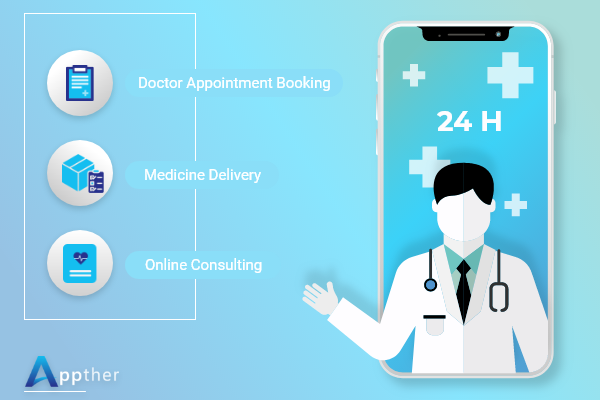
Introduction: The Digital Front Door of 2026
In the current healthcare landscape, the “Digital Front Door” is no longer a luxury it is the primary interaction point between a patient and their provider. As we navigate 2026, doctor appointment booking app development has evolved from simple calendar syncing into complex, AI-orchestrated ecosystems.
Modern patients demand more than a list of available slots; they seek personalized, immediate, and intelligent interactions. For healthcare providers, these apps are the engine of operational efficiency, reducing “no-show” rates by up to 35% and automating administrative burdens that lead to clinician burnout.
1. The Shift to AI-Driven Patient Engagement
The most significant trend in 2026 is the transition from “Static” apps to “Agentic” apps. Traditional forms are being replaced by conversational interfaces that understand medical context.
The Power of AI Chatbots in Triage
Integration of specialized medical bots allows for 24/7 patient interaction. Instead of scrolling through endless lists, a patient can describe symptoms to an intelligent interface that suggests the right specialist.
Deep Dive: To see how these interfaces work in real-time, explore our specialized AI Chatbot Development Services, where we build HIPAA-compliant bots designed for clinical accuracy.
The Rise of the Voice Agent
For elderly patients or those with accessibility needs, typing on a screen can be a barrier. In 2026, Voice Agents are the gold standard. These agents can handle complex booking flows, insurance verification, and even pre-appointment screening via natural spoken language.
Case Study: Discover how we implemented these technologies in our AI Voice Agent for Healthcare Case Study, demonstrating a 50% reduction in call center volume for major clinics.
2. Core Architecture: The Three-Panel Ecosystem
A. The Patient App (The Consumer Experience)
- AI-Symptom Checker: Uses LLMs to categorize urgency (Triage) before booking.
- One-Click Telemedicine: High-definition, encrypted video consultation rooms.
- Smart Payments: Integrated with Apple Pay, Google Pay, and direct Insurance Billing (Auto-claims).
-
Family Health Records: Manage profiles for children or elderly parents within a single login.
B. The Doctor App (The Efficiency Tool)
- Ambient Clinical Intelligence: AI that listens to the visit and auto-generates EHR notes, allowing the doctor to focus on the patient, not the keyboard.
- Dynamic Schedule Optimization: AI predicts “no-shows” based on historical data and automatically offers those slots to waitlisted patients.
-
E-Prescription Integration: Instant syncing with local pharmacies for immediate medication fulfillment.
C. The Admin Panel (The Command Center)
- Revenue Cycle Management: Automated billing and financial reporting.
- Staff Orchestration: Manage shifts for doctors, nurses, and lab technicians.
-
Marketing & Ad Engine: Run health awareness campaigns and track conversion rates directly within the dashboard.
3. Technical Architecture & Tech Stack (2026 Standards)
Building for healthcare requires a “Security-First” mindset.
4. Strategic Implementation: From Idea to Launch
Phase 1: Discovery & HIPAA Mapping
Healthcare app development begins with compliance. You must map out every data touchpoint to ensure it meets HIPAA (USA), GDPR (EU), or PIPEDA (Canada) standards. This includes end-to-end encryption for all messages and video calls.
Phase 2: UI/UX for Universal Design
Medical apps are used by people in distress. The design must be “calm.” This means using high-contrast fonts, accessible color palettes (blues and whites), and a “maximum three-click” rule to reach any core feature.
Phase 3: Integration with Legacy Systems
Your app cannot exist in a vacuum. It must communicate with existing EHR (Electronic Health Records) like Epic or Cerner. We utilize HL7 FHIR APIs to ensure that data flows seamlessly between your app and the hospital’s central database.
5. Future-Proofing: The Internet of Medical Things (IoMT)
In 2026, the app is the hub for wearable data. By syncing with Apple Health or specialized medical wearables (CGMs, smart oximeters), the app can alert a doctor before a patient even knows they need an appointment. This proactive “Preventative Booking” is the next frontier of healthcare ROI.
6. FAQ: Common Queries in Healthcare App Development
Q1: How do you ensure the AI doesn’t give wrong medical advice?
Our AI agents are built with “Guardrails.” They do not diagnose; they triage. If a patient mentions “chest pain,” the AI is programmed to bypass booking and immediately provide emergency contact details.
Q2: Can we integrate with local pharmacies?
Absolutely. By integrating with pharmacy management APIs, your app can allow patients to choose their preferred pickup location at the moment of the digital consultation.
Q3: What is the average ROI for a doctor booking app?
Most clinics see a return on investment within 8–12 months through reduced administrative staff costs, eliminated paper processes, and significantly higher patient retention rates.
Conclusion: Transforming Healthcare with Appther
The development of a doctor appointment booking app is no longer just a coding task—it is a strategic transformation of how care is delivered. By leveraging AI Voice Agents and Intelligent Chatbots, you create a seamless bridge between medical expertise and patient needs.
At Appther, we don’t just build apps; we engineer healthcare solutions for the future. Whether you need a Voice Agent to handle your front desk or a Smart Chatbot to streamline triage, we have the expertise to scale your medical business.
Thanks for sharing such beautiful information with us. I hope you will share some more information about doctor appointment booking app development. Please keep sharing.
Good One, Keep posting more. Your blog well explained sophisticated healthcare solutions. Here, I also like to share the best Andrology Consultant in Madurai who provides the best solution for male infertility-related problems.
Good One, Keep posting more. Your blog well explained sophisticated healthcare solutions. Here, I also like to share the best Andrology hospital in Madurai which provides the best solution for male infertility-related problems.
A great piece that sheds much-needed light on On-Demand Healthcare App Development Company and its impact on business as there are many new details you posted here. Sometimes it is not so easy to build a “Mobile App” without custom knowledge; here you need proper development skills and experience. However, the details you mention here would be very much helpful for the beginner.